
Not panicking is too hard to do
Most people would have missed the violent reaction of the European currency and bond markets to Mario Draghi’s discussion of the ECB’s policy statement last Thursday. I say ‘violent’ since the currency and bond markets registered movements of +1.5 and -3% respectively, during 15 minutes of trading post announcement. Mario Draghi apparently disappointed the investment community by not adopting a more aggressive QE/negative interest rate/broader bond purchasing policy. My reading of Draghi’s statement was that the ECB committed to extending their bond buying policy without signalling any end in sight. The question I find intriguing, is who, exactly was so disappointed that they inflicted tremendous losses on themselves and others?
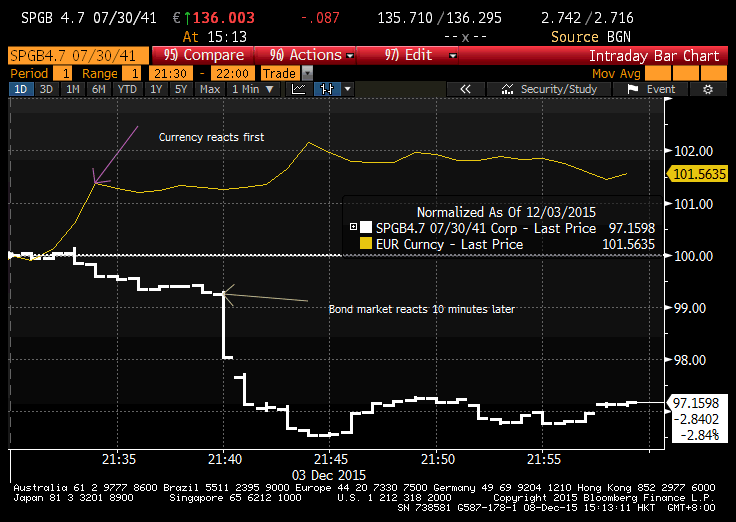
The Bloomberg grab shows both the impact on the Euro (in yellow) and on Spanish bonds (in white).The diagram is fascinating for a number of reasons. First, the policy statement was released at 20:45pm while Mario Draghi began talking at 21:30pm. Strangely, the market reacted to Draghi’s verbal comments rather than the policy itself. Second, the first market to panic was the currency with the Euro starting to jump about 1 minute into the speech. For its part, the bond market started to fall gently about 2 minutes later, however the big panic came at 21:40, a full 10 minutes after Draghi began talking and 8 minutes after the Euro had done its thing.
The fact that the currency market led the bond market by a full 8 minutes in response to the same information is unusual. Either these markets move in tandem or there should have been no delayed reaction. Simultaneous cross-market reaction is generally driven by movements in one price triggering stop-loss orders in other markets – for instance, a short position in Euro hedging a long position in Spanish bonds should be unwound together. This did not seem to be the case.
It seems that the bond market participants hit the ‘me too’ panic button, albeit a bit late. By this, I mean, they read the ECB statement at 20:45pm and decided it was ok. They began listening to Draghi’s press conference, and this seemed ok too. But then some bond traders noticed that the currency market was in a panic, and rather than ignore it, they decided to join in and panic too – 8 minutes later.
If you are a trader, and you sit too close to the market every day, it seems NOT panicking is simply too hard to do…